Hydropower
Hydropower facilities in the United States can generate enough power to supply one-quarter of all households--28 million of them--with electricity. This is the equivalent of nearly 500 million barrels of oil or 100 average-sized coal power plants. But as climate change dries some of the country's water sources and shifts run off patterns, the traditional way of predicting stream flow, designing dams, and consuming electricity no longer applies.
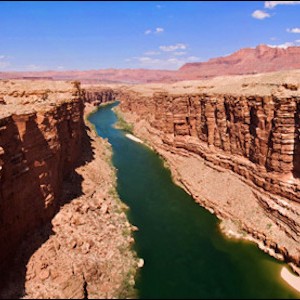
Studies indicate that the current drying trend in the Southwest will continue. For instance, Lake Mead, the largest reservoir in the U.S., has a 50 percent chance of dropping too low for power generation by 2017 and a 50 percent chance of going completely dry by 2021, according to the Scripps Institution of Oceanography. And the Colorado River Compact currently calls for 16.5 million acre-feet (MAF) of water per year to be allocated between the United States and Mexico, while the actual average river flow is most likely between 14 and 15 MAF. The end result is that millions of Americans could be thrown into energy uncertainty if water allocations to the basin states don’t reflect lower flows.

Feature Stories
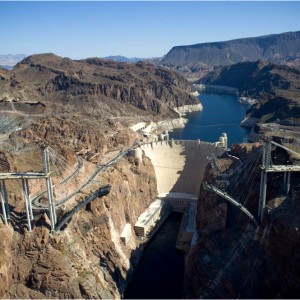
What happens if Lake Mead drops too low to generate electricity at Hoover Dam?
American Rivers’ annual tally of threatened rivers highlights effects of drilling for natural gas.
Growing supply and demand gaps.
New report highlights possible solutions to state’s water shortages
Multi-Media
Completed in 1935, Hoover Dam supplies electricity to 29 million people in Arizona, California and Nevada.
Hydropower Stories
The most dramatic freshwater news stories of 2011 literally broke wide open in the Pacific Northwest’s hydropowered region, as two major Washington currents were unplugged in in order to replenish an endangered, iconic, transrational species of fish. In that same spirit of silent wonder, and agape, the following 318 words began to arrange and then unglue themselves to honor these inspired, extraordinary events.
A negotiated agreement ends a three-year conflict between North Carolina and South Carolina over the Catawba and Yadkin rivers.
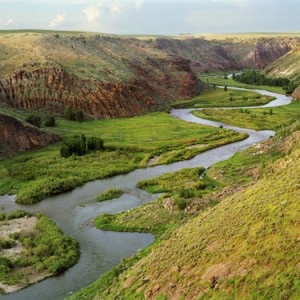
Whether, where, and how to build new dams: the old Western debate.
Dam decommissioning accelerates in the Pacific Northwest.
Congress solidifies a federal judge’s ruling to settle a 20-year-old dispute.
The Catawba River is used by more than 30 cities and 17 counties for industry and drinking.
Rigged feasibility study shows desperation for new surface reservoirs.
Californians love (or hate) to fight about water in part because there are no easy solutions left.
Protection for 2.1 million acres of land and 1,000 miles of rivers.
A stagnant layer of unpotable water is all that remains of Tampa’s Bill Young Reservoir.
Government
- Bonneville Power Administration Federal Columbia River Power System
- Energy Information Administration (EIA) Energy Consumption and Renewable Energy Development Potential on Indian Lands (April 2000)
- Energy Information Administration (EIA) Table of Net Generation from Hydroelectric Power by State by Sector (Year-to-Date through July 2010 and 2009; as of October 14, 2010)
- Energy Information Administration (EIA) Table of Renewable Energy Consumption by Energy Use Sector and Energy Source
- Energy Information Administration (EIA) Table of Renewable Energy Consumption by Energy Use Sector and Energy Source (2004-2008)
- Energy Information Administration (EIA) Table of Renewable Energy Consumption for Electricity Generation by Energy Use Sector and Energy Source (2004-2008)
- Energy Information Administration (EIA) Table of Electricity Net Generation From Renewable Energy by Energy Use Sector and Energy Source (2004-2008)
- Energy Information Administration (EIA) Table of U.S. Electric Net Summer Capacity (2004-2008)
- Federal Energy Regulatory Commission Federal Energy Regulatory Commission
- Idaho National Engineering and Environmental Laboratory – Renewable Energy Products Department U.S. Hydropower Resource Assessment Final Report (December 1998)
- U.S. Bureau of Reclamation Hydroelectric Power: Managing Water in the West
- U.S. Congress Bill (written by members of Nevada Congressional Delegation) Hoover Power Allocation Act of 2010: Delivering Clean Renewable Hydropower to Southwest States and Cities – Fact Sheet
- U.S. Department of Energy (DOE): Energy Efficiency and Renewable Energy – Wind and Hydropower Technologies Feasibility Assessment of the Water Energy Resources of the United States for New Low Power and Small Hydro Classes of Hydroelectric Plants (January 2006)
- U.S. Department of Energy – Western Area Power Administration Serving the West with Federal Hydropower
- U.S. Department of the Interior, U.S. Department of the Army, and U.S. Department of Energy (DOE) Potential Hydroelectric Development at Existing Federal Facilities: For Section 1834 of the Energy Policy Act of 2005 (May 2007)
- Western Area Power Administration Harnessing Hydropower
Institutes
- Database of State Incentives for Renewables & Efficiency (DSIRE) – NC Solar Center and Interstate Renewable Energy Council Interactive Map of Comprehensive Information on State, Local, Utility and Federal Incentives to Promote Renewable Energy and Efficiency.
- Electric Power Research Institute (EPRI) Assessment of Waterpower Potential and Development Needs (March 2007)
- Pew Center on Global Climate Change Climate Tech Book – Hydropower Fact Sheet (October 2009)
Media
- IEEE Spectrum (Magazine of the Institute of Electrical and Electronics Engineers) The Future of Hydropower (June 2010)
- The Wall Street Journal Water Surge: Hydropower, once shunned because of environmental concerns, is making a comeback (September 13, 2010)