Global Rundown
- A new study suggests that Tehran, Iran, is sinking at more than 6 inches per year due to groundwater extraction, as a Day Zero scenario looms.
- A devastating typhoon hit the village of Kipnuk, Alaska, killing one person just months after an EPA grant to mitigate flooding impacts was canceled.
- Investigators have found that the Philippines’s perceived action on flood control is marked by false projects and illegitimate spending, sparking national protests.
- Riverine heat waves are lasting twice as long as atmospheric heat waves, and occurring up to four times more frequently, according to a new study of 1,500 American river sites.
The Lead
Since Philippines President Ferdinand Marcos Jr. took office in 2022, the country has spent nearly $9 billion on almost 10,000 flood-control projects across the country — a necessity for a nation that is one of the world’s most at-risk to climate change and regularly battered by 20 typhoons a year.
But these funds are not translating to on-the-ground action. In some instances, they aren’t going to any project at all.
Last week, investigators found that at least 421 projects that were marked as completed had never existed, the Guardian reports. In the province of Padora, which had received the most funding of any region ($75 million), “20 percent or more of project funds went to kickbacks for lawmakers alone.”
Meanwhile, citizens are dying in floods. At least 10 people were killed in storms in southern Luzon province in September, just days after Super Typhoon Ragasa also killed 10 people in the country’s northern region. At least 25 people died in landslides and flooding resulting from Typhoon Emong in July. Across these storms, thousands of people have been displaced from their homes.
Protests have erupted in the face of this corruption. In late September, tens of thousands of demonstrators — many of them young people — took to the streets of Manila to demand accountability and actual climate action. Several smaller protests have followed, with another large-scale march scheduled for November 30.
Earlier this month, youth-led protests in Madagascar — focused on government inaction, poor water infrastructure, and a lack of water access — led to the dissolution of the Malagasy government. Similar protests have continued since last year in Morocco, and tens of thousands of people took to the streets of Ecuador last month to voice their disdain for the government’s recent moves to expand the local mining industry, which critics say comes at the expense of freshwater sources and habitat.
Recent WaterNews from Circle of Blue
- Solar Growth Cushions Colorado River Hydropower Declines — Southwest utilities are diversifying their electricity assets.
- Jane Goodall’s Legacy Included Protecting Clean Water — She was one of history’s greatest environmentalists.
This Week’s Top Water Stories, Told In Numbers
106
Places in Iran where basin-scale subsidence — land sinking due to the extraction of groundwater, used primarily for agriculture — has been measured, according to a study published this summer in JGR Solid Earth. Locations that are sinking at a rate greater than 0.39 inches per year span more than 12,000 square miles, “an area the size of Belgium,” and roughly three-fourths of these areas are used for either agriculture or building development.
“We find most of this land movement due to water store shrinking cannot be reversed,” the researchers write.
Seven of the 10 most-populated Iranian cities, including the capital Tehran and the town of Karaj, are located near one of the 106 subsiding regions. Both of these urban centers are sinking at the fastest rates observed in the study: more than 6 inches per year.
This summer, a Day Zero watch was put in effect for Tehran, home to 10 million people, as ongoing drought persisted. Last week, the Islamic Republic News Agency — media controlled by the Iranian government’s Ministry of Culture — admitted that 19 major dams were on the verge of drying up, and 3 had already run dry.
Iran’s president has stated that the country’s capital must move out of Tehran due to the water crisis, over-development, and subsidence.
$20 million
Money earmarked by the U.S. Environmental Protection Agency during the Biden administration for Kipnuk, Alaska, a Yu’pik village located on the Bering Sea, to install projects to mitigate riverbank erosion and riparian flooding during heavy storms. But this grant was cancelled in May as part of the agency’s sweeping actions against perceived DEI initiatives. This weekend, Typhoon Halong made its way through the northern Pacific Ocean and into Alaska’s Yukon-Kuskokwim Delta, “producing a storm surge that flooded villages as far as 60 miles up the river,” The Conversation reports. Hundreds have been displaced in the region, homes have been swept off their bearings, and one person died in the storms.
It is unlikely, the New York Times reports, that the three-year grant-funded project would have been completed by now, though some planning and construction were scheduled to take place between June and September.
On the Radar
A study published last month in the journal PNAS suggests that riverine heat waves last nearly twice as long as atmospheric heat waves — 7.2 days in rivers, compared to 4 days in the air — and are occurring at increasing rates.
“While air heat waves often grab headlines, riverine heat waves have gone quietly unnoticed because rivers are commonly perceived as cool refuges,” the researchers write in the study.
The study modeled 1,471 American river sites, and found that between 1980 and 2022, “episodes of thermal stress have increased in 82 percent of rivers, reaching the critical level in 74 percent of them,” El País reports.
In context: The Future of Lake Superior with Climate Disruption
Wetland Watch
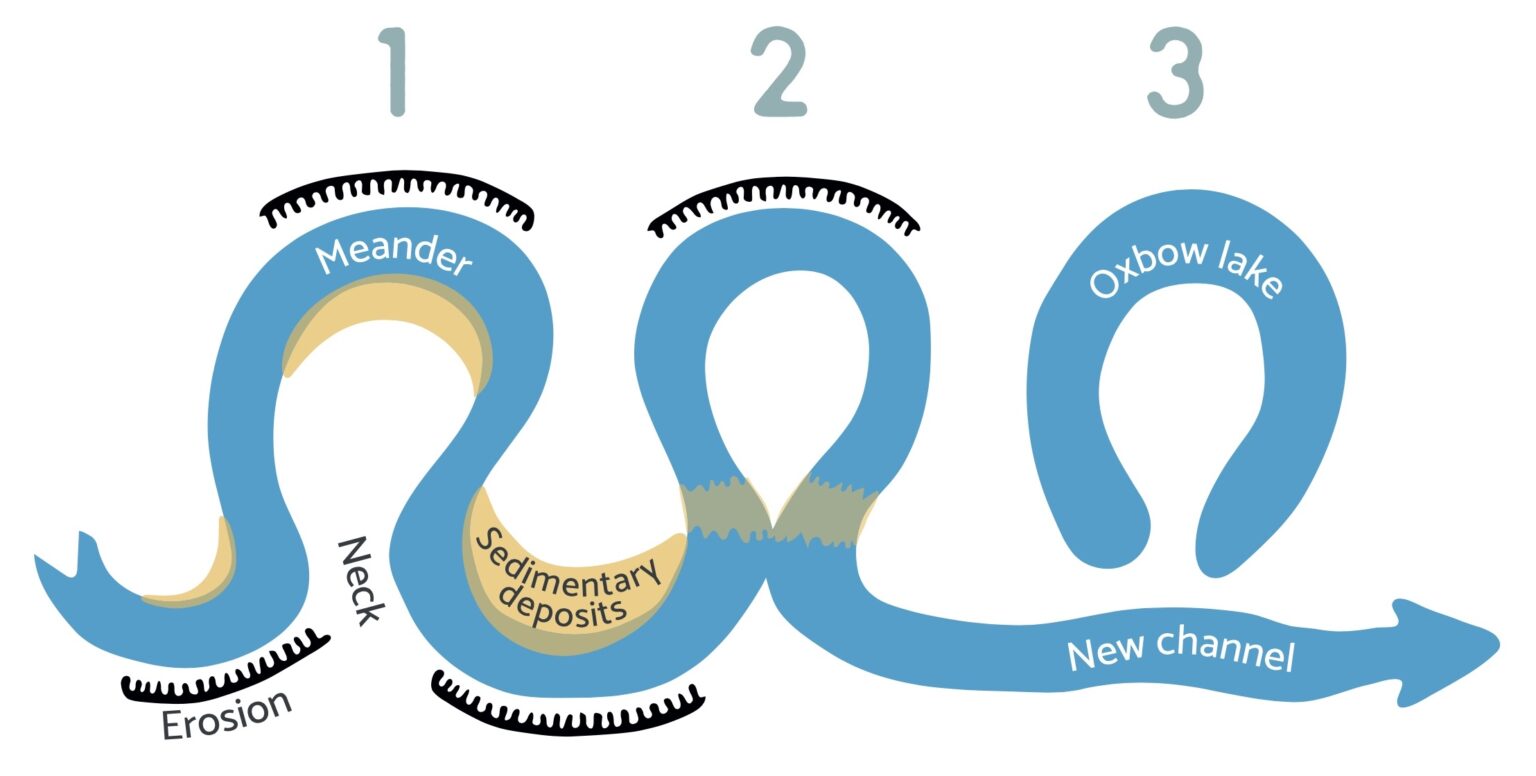
Oxbow Lakes: Two oxbow lakes have been named India’s 92nd and 93rd official Ramsar sites, designated as Wetlands of International Importance. Gokul Jalashay, located on the southern end of the Ganges River, and Udaipur Jheel, which borders the Udaipur Wildlife Sanctuary, were announced in late September. According to Ramsar, Udaipur Jheel “faces threats from illegal fishing and intensive agriculture, particularly the use of chemical fertilizers and pesticides.”