
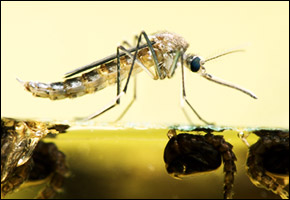
Dengue Epidemic Hits South American Urban Centers
With the rainy season still to come, South America is already facing one of the largest dengue fever epidemics on record.
Dr. Eddy Martinez, the director of epidemiology for Bolivia’s Ministry of Health, told The Miami Herald that the current outbreak is “the largest epidemic in many years.”
During a daylong campaign in March, health and civic workers went door to door in Santa Cruz, Bolivia’s largest city, asking homeowners to dispose of water-bearing containers — a prime habitat for the development of mosquitoes, the primary carrier of the disease.
But the preventive measures may have been too little, too late.
According to the Pan American Health Organization (PAHO), there have already been more than 230,000 cases of dengue and 74 deaths throughout Latin America as of mid-April, with severe outbreaks in the Southern Cone, Andean, and Caribbean subregions. (The last outbreak of this magnitude was in 2008, when there were more than 1 million cases of dengue reported and 554 deaths in Latin America and the Caribbean.)
For Bolivia, this translates to more than 55,000 cases so far this year. Other countries reporting outbreaks include Brazil with 125,000; Argentina with 13,000; French Guinea with 9,000; and Paraguay with 4,500.
Since there is no immunization and few treatment options for dengue symptoms, the best form of prevention is the control of mosquitoes, either chemically or by employing proper environmental management.
Emergency control during outbreaks is expensive and often includes insecticide application by handheld sprayers, truck-mounted machines, or aircraft. However, many community-based programs, like those in Santa Cruz, recommend more accessible public health services and higher government spending on clean water and refuse disposal.
And while severe outbreaks of dengue are not uncommon in South America — there were 80,000 cases in 2007 in Venezuela alone, according to the World Health Organization (WHO) — health officials worry that the upcoming Caribbean rainy season will only compound the situation. For now, the weather has grown cooler and eased the epidemic in the Andean region, but experts fear that the current lull may only be temporary.
Found in tropical climates, dengue is a mosquito-borne viral infection causing severe flu-like symptoms, especially in urban areas. There are four closely related viruses that cause dengue, but currently there is no vaccine or specific treatment to cure or prevent the infection.
Physicians treat fever and dehydration symptoms, which can prevent the infection from becoming the often fatal dengue haemorrhagic fever (DHF). Occurrence of dengue worldwide has risen considerably in recent decades, and about two-fifths of the world’s population are now at risk, according to WHO.
Source: CDC, The Miami Herald, PAHO, WHO
is a Traverse City-based assistant editor for Circle of Blue. She specializes in data visualization.
Interests: Latin America, Social Media, Science, Health, Indigenous Peoples







Leave a Reply
Want to join the discussion?Feel free to contribute!