

The Great Lakes contain 20% of the world’s fresh surface water, making them essential for global water security, trade, and climate regulation. They sustain 40 million people, drive industry and agriculture, and are central to U.S.-Canada water management, conservation, and cross-border environmental policies.
Latest

North Bay’s PFAS problem: 5 things to know about a ‘forever chemicals’ hotspot in Ontario


Find a story near you
The Great Lakes: Unprotected
This series documents how novel rule-making, staff cuts, and dramatic shifts in funding priorities are systematically unraveling a 60-year-old program of safeguards for the region’s rivers, lakes, wetlands, habitat, and drinking water. The government’s neglect sharply increases the region’s vulnerability to water pollution, land degradation, economic disruption and harm to human health.

A Nuclear Shift Buoyed by Billions, and the Waters of the Great Lakes

Ohio EPA Considers ‘Lowering of Water Quality’ Necessary for Data Center Growth

An Obscure Provision In FEMA’s Program To Prevent Disaster Is Making Serious Flooding Worse

National AI Boom Hits Home as Demand for Power Surges

Momentous Court Decisions Near For Line 5 Oil Pipeline

Three Great Lakes States at Greatest Risk as EPA Rolls Back Wetland Protections

The Next Deluge May Go Differently

New Era of Confrontation Between Energy and Water Opens in Great Lakes
The latest from Circle of Blue and The Great Lakes News Collaborative Partners
Energy & Technology

Hoover Dam Approaches a Hydropower Cliff

Ohio Needs Power For Its Data Centers. Lawmakers Want to Redefine ‘Clean Energy’ to Get It
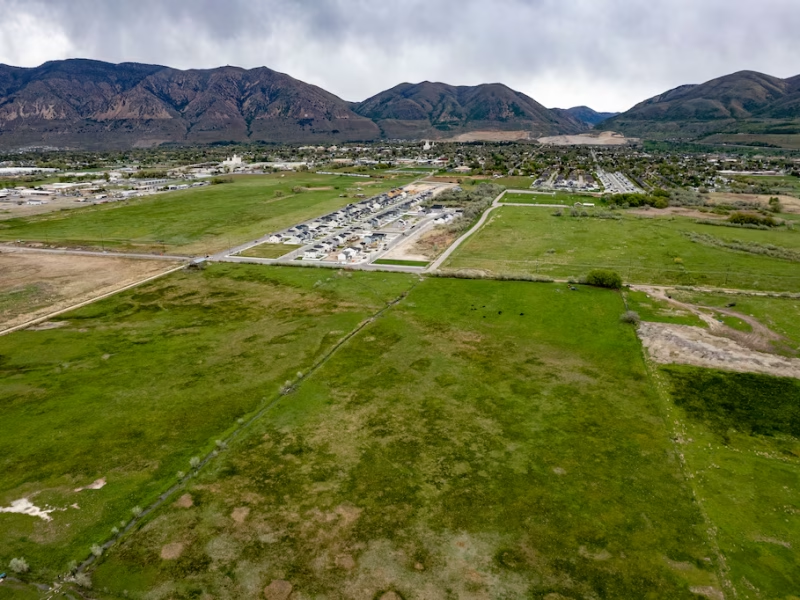
Utah’s Big Nuclear Bet – Feasible or Fantasy?

Trump has an energy ‘tiger team.’ Carney’s fast-tracking office ‘operates similarly,’ docs say

Northern Michigan’s Extreme Climate Disaster
Infrastructure

Broke and On Their Own: Small Water Systems Lose Ground as Federal Support Wavers

Climate Emergencies Are Breaking Water Utilities. Customers Are Paying

Senate Overturns Ban On Mining Near Boundary Waters Wilderness

Stalled Farm Bill, Slashed Grants Undercut Farmers’ Water Protection Efforts

EPA Reversal Opens the Door to More Mercury Pollution
Ecosystems


Gone a Century, Arctic Grayling Return Soon to Michigan. Can They Survive?

Have You Seen This Fish Thief?

Harnessing Mussels to Filter Fresh Water


Fresh Newsletter

The Great Lakes are at the frontlines of climate change, facing rising temperatures, fluctuating lake levels, pollution, and stressed ecosystems. What happens here offers a preview of global water challenges — from ensuring safe drinking water to balancing economic growth with environmental protection. Paying attention to Great Lakes news is not just about regional concern; it’s about understanding how water security shapes our shared future.
Fresh is a weekly newsletter from Circle of Blue that unpacks the biggest international, state, and local policy news stories facing the Great Lakes region today.
Sign up for Fresh: A Great Lakes Policy Briefing, straight to your inbox, every Wednesday.
The Great Lakes News Collaborative
The Great Lakes News Collaborative includes Bridge Michigan, Circle of Blue, Great Lakes Now at Detroit Public Television, Michigan Public and The Narwhal, newsrooms working together to report on the most pressing threats to the Great Lakes region’s water. This independent journalism is supported by the Charles Stewart Mott Foundation.
Collaborative Investigations
The Blue Economy: cash flows

A Great Lakes News Collaborative series on the relationship between the region’s economy and its most abundant natural resource: water.
This multi-part series revisits a vision set forth a decade ago by Great Lakes leaders to reshape the region’s economy around the stewardship of its most vital asset—water. Through original reporting across the Great Lakes basin, the GLNC newsrooms assess the current state of the “blue economy” and how it has evolved over the past ten years.


The checkup: Water and Human Health in a changing climate

This is a series of articles and broadcasts on water, climate change, and human health in the Great Lakes region. Produced by the five partners of the Great Lakes News Collaborative — Bridge Michigan, Circle of Blue, Great Lakes Now, Michigan Public, and The Narwhal — the stories connect planetary change to personal health. At its core, the series is about unexpected outcomes and foreseeable threats to the welfare of the region’s people due to global warming and the disruption of its water. These changes – from drying forests and warming waters to rising heat and the spread of disease – will force the region’s elected officials, health professionals, engineers, researchers, and neighborhoods to rethink business as usual.


Refresh: What comes next for great lakes clean water

Refresh investigates water pollution challenges in the Great Lakes region, explores the Clean Water Act’s shortcomings and how the region can better address water pollution.


water’s true cost:


After Decades of Neglect, Bill Coming Due for Michigan’s Water Infrastructure
Federal and state governments begin to reverse course on underinvestment to address water’s true cost.

Great Lakes News Collaborative Wins US Water Prize
Throughout the Great Lakes region and across the U.S., water systems are aging. In some communities, this means water bills that residents can’t afford or water that’s unsafe to drink. It means that vulnerable systems are even more at risk in a changing climate. From shrinking cities and small towns to the comparatively thriving suburbs, the true cost of water has been deferred for decades.


Ready or Not
The Great Lakes region is frequently touted as one of the most climate-resilient places in the U.S., in no small part because of its enviable water resources. But climate change also threatens water quality, availability, and aging water infrastructure by exposing existing vulnerabilities and creating new ones. In this series, members of the Great Lakes News Collaborative explored what it may take to prepare the Great Lakes region for the future climatologists say we can expect.

Water Could Make Michigan a Climate Refuge. Are We Prepared?
What may it take to prepare the Great Lakes region for the future climatologists say we can expect?


