KEYPOINTS:
Wildfire risk is elevated through the Upper Midwest, posing threats to remote lakes.
Advocates look to controlled burns to mitigate wildfire risk.
Indigenous people have used this tool for centuries in Minnesota’s northeast region.
Early research suggests that watersheds can quickly recover from small fires.
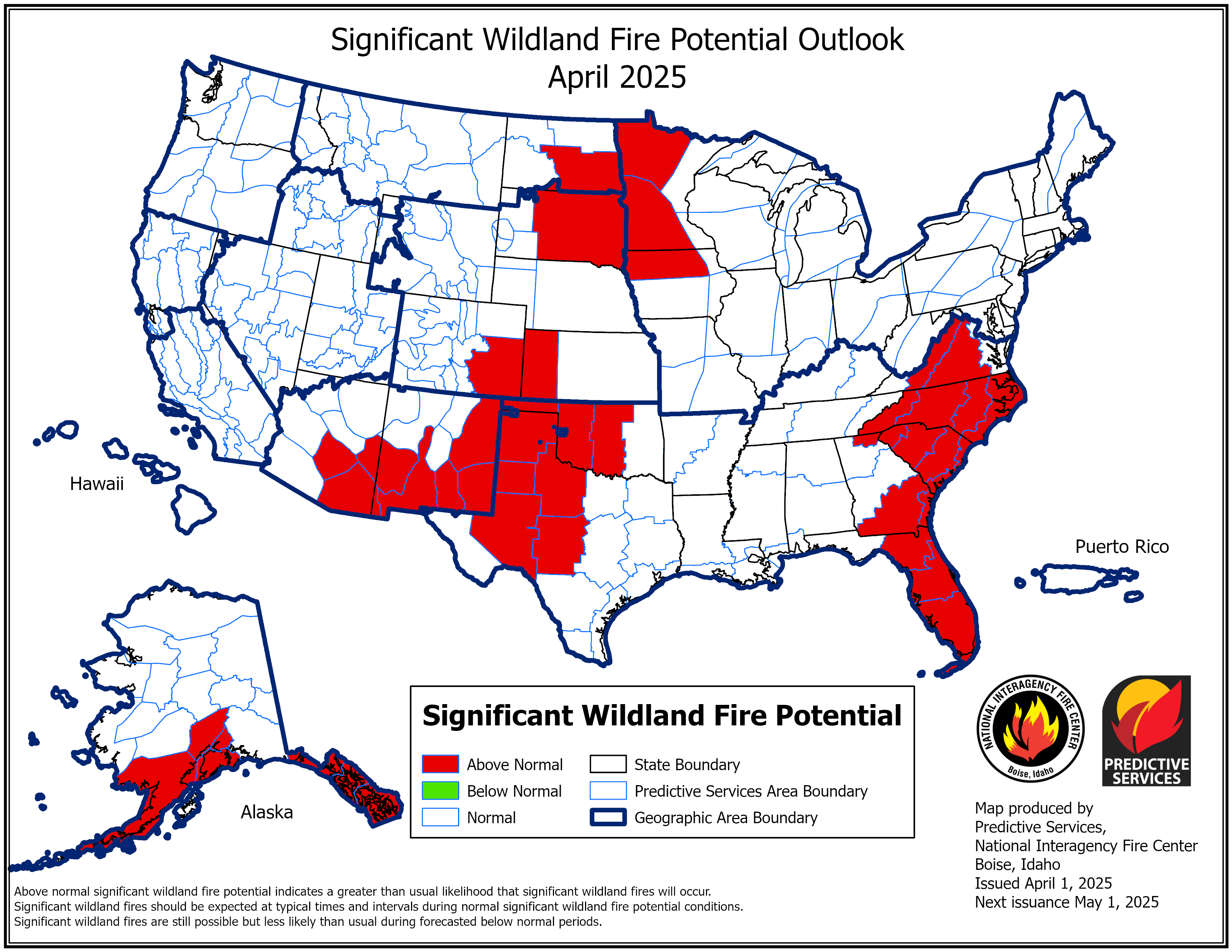
Wildfire risk is predicted to stay elevated through June in the Upper Midwest from drought and high winds. That’s risky for the region’s pristine inland lakes, but land managers are working to reduce wildfire risk in the Northwoods with controlled burns.
Some experts are advocating for increasing the use of this centuries-old method of prescribed fire to create more resilient ecosystems.
Chris Filstrup knows how severe fire changes freshwater in Minnesota’s wilderness. He’s a lake scientist at the University of Minnesota Natural Resources Research Institute and investigates the consequences of the 2021 Greenwood Fire for remote lakes. Along with a team of researchers, Filstrup continually samples lakes in the burnscar each summer for water quality issues like high levels of phosphorus, carbon and nitrogen.
According to a study Filstrup published in the journal Geological Research Letters, charred lakes have higher nutrient levels than their unburned counterparts. Those degraded waterways are still brown and murky – the color of tea, Filstrup said.
Yet, each watershed of the 15 fire-affected lakes Filstrup studies responded differently to the Greenwood Fire. For some, the flames incinerated entire shorelines. For others, the fire was further back, scorching only a small slice of the watershed. Filstrup found that the more severe fires caused worse damage because hotter flames burn more vegetation and disturbs the soil. That allows more nutrients to flow into lakes.
“Anything we can do to reduce the potential severity of those fires would be a good thing,” Filstrup said.
Prescribed burns – low intensity fires planned by land managers – prevent the likelihood of catastrophic wildfires by reducing fuel loads. When fire catches in areas with dead trees, dense shrubbery and overgrown vegetation, flames have more to feed on and spread quickly.
These less severe fires can harm water quality, but those impacts are temporary, especially compared to intense wildfires.
“If you have higher severity fire, you kill all the [tree] canopies,” Ge Sun, a U.S. Forest Service research hydrologist, said. “They get too hot. The soil is burned bare, too, and it’s difficult for the vegetation to grow back. But that’s not the case for prescribed fire.”
When trees burn, the whole water cycle of the forest changes. Trees put water back into the atmosphere through a process called evapotranspiration. Roots also store water in the soil and filter it, taking out some of the impurities before it flows into lakes. With fewer trees, more water ends up flowing into waterways instead of the atmosphere or groundwater, and it holds more contaminants.
Despite the potential for prescribed fire to protect water quality by reducing the chances of catastrophic fire, little research has actually investigated how this tool affects lakes.
Peter Caldwell is trying to understand those consequences for forested watersheds. At an experimental forest in North Carolina called the Coweeta Hydrologic Laboratory, Caldwell – who, like Sun, is a Forest Service hydrologist – is collaborating on a study launched in 2019 to find out if prescribed fires can be used without causing water issues.
“We’ve got some early results that suggest that because these are low severity fires, those impacts are very small and short-lived,” Caldwell said.
Low severity fires kill only the forest understory, which can recover quickly, Sun said. Besides, many species depend on fire to thrive, such as blueberries and jack pines in northern Minnesota. These species adapted to fire because it’s a regular, natural phenomenon.
Fire will happen in forests across the continent with or without people, Sun said.

Fire suppression
In much of the country, including Minnesota’s Superior National Forest and the Boundary Waters Canoe Area Wilderness, people have been managing the land with controlled fire for centuries.
Nisogaabokwe Melonee Montano dedicates much of her time understanding the relationship between fire and land. She’s a doctoral student at the University of Minnesota and an enrolled member of the Red Cliff Band of Lake Superior Ojibwe.
“The Indigenous people, when you look at pre-colonization, across the entire landscape had been using fire to survive, to caretake our lands,” Montano said in a Friends of the Boundary Waters webinar.
“When people had come into the Boundary Waters as a new area for them, they saw it for its beauty and all of those other things,” Montano said. “It was in that state because it was being taken care of by the Anishinaabeg people by things like fire. Fire has always been a part of that ecosystem.”
For instance, the open old growth red and white pine stands surrounding the shorelines of lakes in the wilderness area exist because of fire stewardship.

“That was the world that existed before colonial settlers arrived in North America,” historian Char Miller said. He studies the history of the Forest Service and wrote a book about fire suppression called “Burn Scars.”
Many fire-dependent ecosystems in the Great Lakes haven’t seen flames in decades. Cultural and controlled burns abruptly stopped because of colonization, leaving only wildland fires for a century.
Part of that halt was fear-based. After waves of catastrophic blazes in the late 1800s, like the Great Chicago Fire and the Peshtigo Fire in Wisconsin, the federal government began enforcing strict fire suppression policies. That included the fires Indigenous communities practiced for centuries before.
But Miller said fire suppression policies were also racially motivated, meant to disrupt the lives of native people. Taking away fire disrupted their social, economic and religious lives, and Miller said documents from Spanish missionaries, Franciscans and other settlers explicitly supported that.
“Settler colonialism has many guises,” Miller said, “but around fire, it’s very clear it’s got one voice and that is: Suppress the fire, and you suppress the Indigenous people.”
Climate change is mostly to blame for increasing wildfires, Montano said, but the forced removal of the Anishinaabeg people plays a role. They could no longer steward the land as they had for generations.
Evan Larson, a professor at the University of Wisconsin-Platteville, studies tree rings to understand the history of fire on the landscape. He said during the webinar that the relationship between people, fire and the rest of the ecosystem was disturbed by colonization.
Larson said bringing more fire to the landscape is essential in places like the Boundary Waters, where the bar to conduct prescribed burns is much higher than places like Superior National Forest due to its Wilderness Act status.
“If we think about reciprocity and we recognize that these are fire dependent systems,” Larson said, “we have an increasing responsibility to tend to these places with fire because of the way the landscape has changed, because of the changes that we are seeing everywhere.”
The disruption in regular fire is hurting ecosystem resilience. For example, those open pine stands along lakes in the Boundary Waters become more susceptible to drought and climate change the denser they become. Fire keeps them open and thin.

Prescribed Fire
Teresa Floberg said using prescribed fire as a tool is a necessary part of living in a fire-dependent landscape. She works with Superior National Forest and other stakeholders in northeast Minnesota as the Ely Fireshed Coordinator for nonprofit Dovetail Partners.
Controlled fires are happening. Over the last three decades, the Forest Service has been slowly upping its prescribed burns – including in Superior National Forest. This year, the agency has eighteen prescribed fires across 5,483 acres planned for the northern Minnesota forest to reduce fuel loads, manage vegetation and maintain wildlife habitats.
Tribes in northern Minnesota collaborate with the Forest Service on some prescribed fires in Superior National Forest, including the Boise Forte Band of Chippewa. Cody Swanson, the band’s Forest Programs Manager, said that’s only a fraction of the burns they do. Outside the forest, the unit conducts low-acreage prescribed fires to protect homes and buildings on the reservation. They’re also bringing back cultural burns for blueberries and medicinal plants and plan to expand that practice.
Recently, the Boise Band acquired 28,000 acres near the reservation boundaries that once belonged to a timber company. The band’s Natural Resources Management has to clear out dead and downed trees, along with some other preparation, so they can reintroduce fire practices on a larger scale.
“Reintroducing fire will reintroduce a lot of the different bearberry, red osier dogwood, juneberry, raspberry, all these different medicines that people historically have used here,” Swanson said. “It’s huge that we’ll be able to reintroduce fire on the landscape in areas that might not have had it for hundreds of years.”
Reintroducing more fire is a goal for a lot of stakeholders in the region, including Dovetail Partners. But Floberg said getting fire on the ground in northern Minnesota is challenging.
For one thing, prescribed fires require a lot of preparation, especially in the fuel-riddled region.
“Fuel has to be removed prior to doing a prescribed burn,” Floberg said. “It relies on removing that thick understory, those really flammable trees that could bring even a low intensity fire up into the canopy.”
Sometimes accidents happen. In early June, the Birch Bay Fire that burned more than 30 acres near Ely was likely started by chainsaw operations while Forest Service crews were prepping for a prescribed fire. Hot engines, exhaust and flying sparks could have caught dry grass or pine needles aflame.
Resources are also lacking. There’s a shortage of qualified burners in the state, Floberg said, and conducting burns is expensive.
“There often isn’t a budget at the federal level to do that necessary fuels reduction work to then even be able to consider reintroducing a prescribed fire,” Floberg said.
The financial burden deters private landowners. Floberg said many homeowners in the area want to set prescribed fire on their forested property, but many can’t afford the thousands of dollars price tag to treat even an acre.
Still, the cost to run a prescribed burn versus suppress a wildfire is significantly smaller. It’s a preventative measure, and the dollars can be difficult to justify.
“The upfront cost will save huge expenses down the road,” Floberg said. “It’s just, we’re reactionary. We respond to crises and recovery.”
This article is the second of two parts. See part one here.