The Rundown
- Justices rule unanimously that environmental reviews can be limited to the project at hand and not its implications.
- Army Corps publishes a draft environmental review for the Line 5 oil pipeline tunnel across the Straits of Mackinac.
- USDA finalizes rules for $1 billion in financial aid to livestock farmers affected by drought and wildfire.
- GAO says the Department of Energy could save billions in nuclear waste disposal.
- USGS reports on water quality trends in the lower Boise River, where nutrients are a problem.
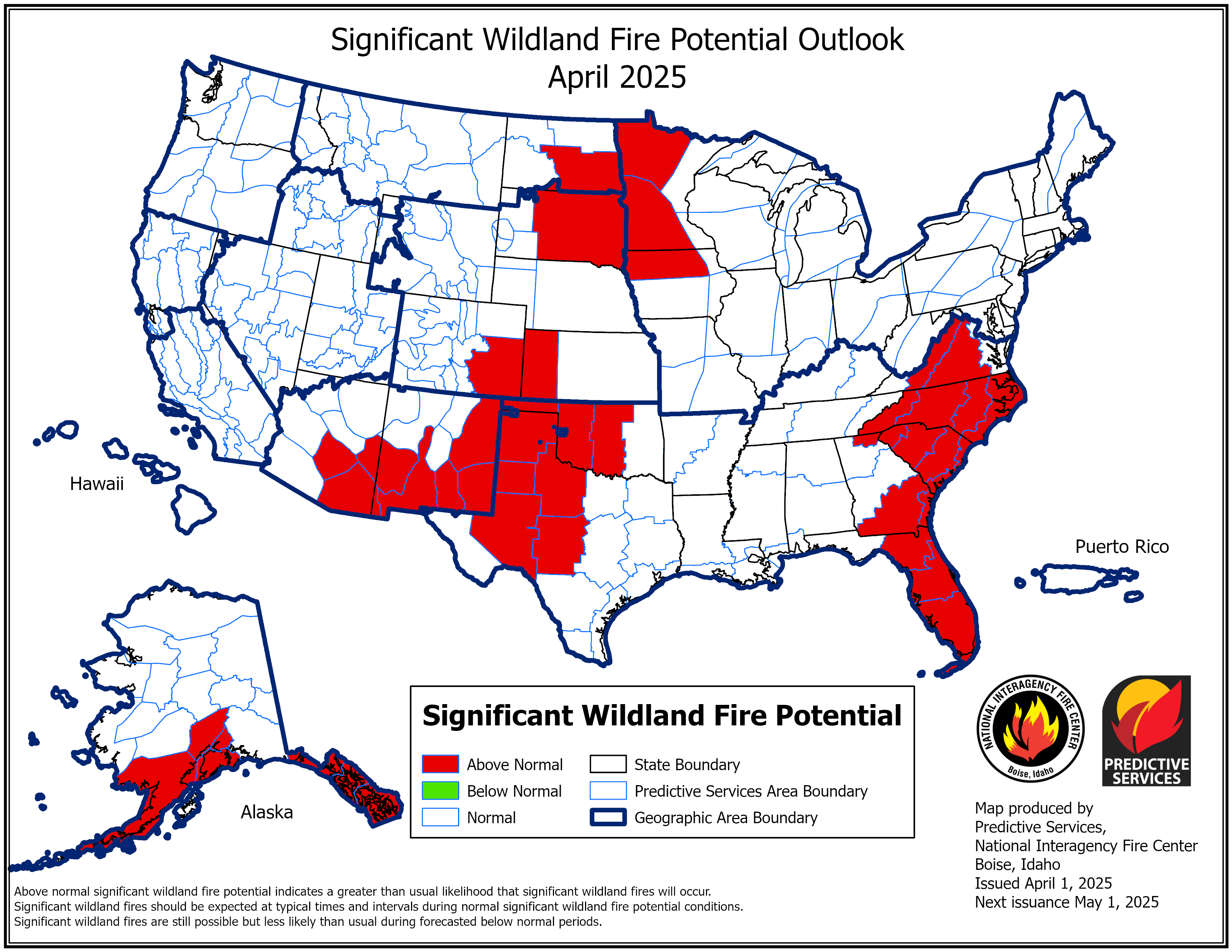
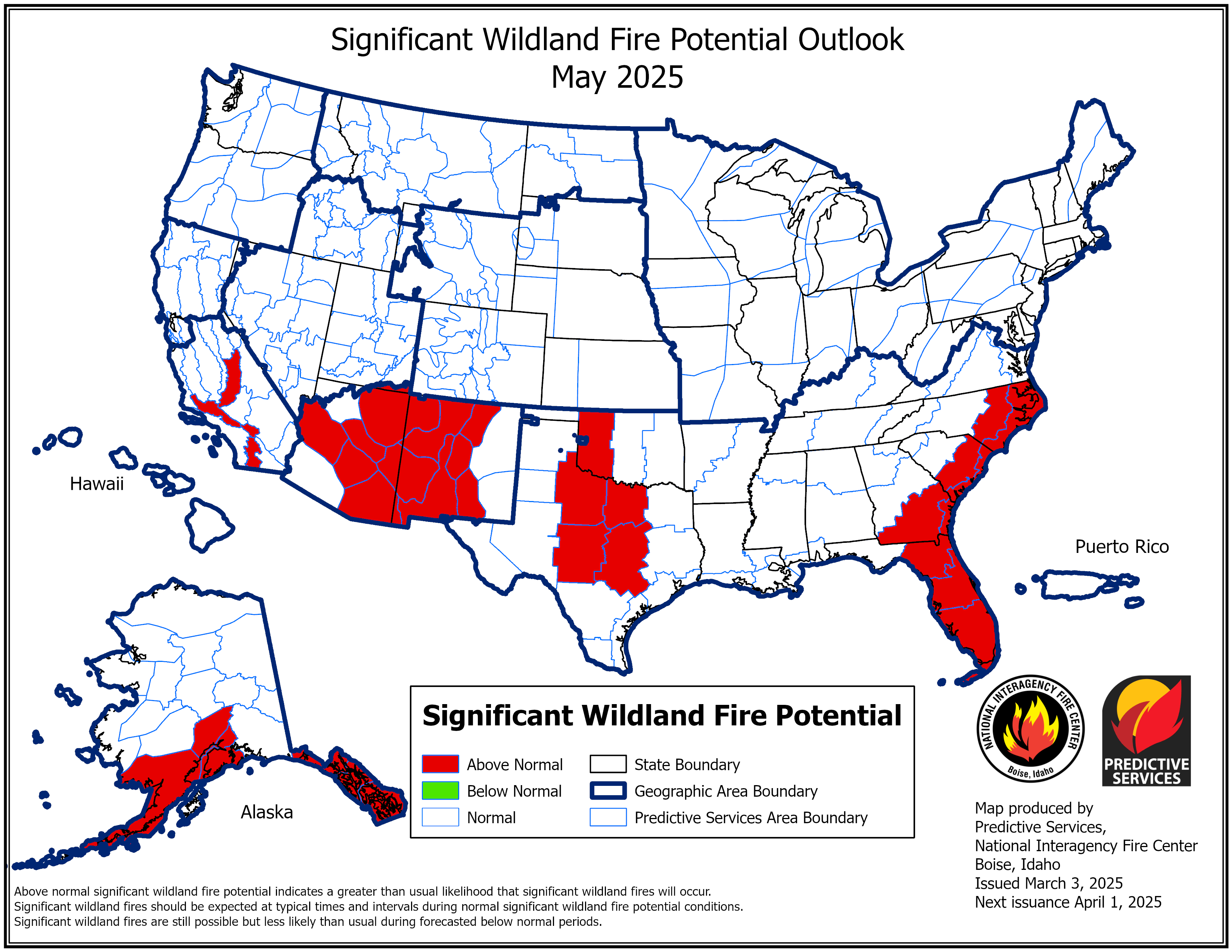
And lastly, federal agencies expect a warmer-than-normal summer in the U.S and significant wildfire risk.
“In sum, when assessing significant environmental effects and feasible alternatives for purposes of NEPA, an agency will invariably make a series of fact-dependent, context-specific, and policy-laden choices about the depth and breadth of its inquiry — and also about the length, content, and level of detail of the resulting EIS. Courts should afford substantial deference and should not micromanage those agency choices so long as they fall within a broad zone of reasonableness.” – U.S. Supreme Court ruling that the analysis in an environmental impact statement can be constrained to a single project and not outcomes that the project enables. NEPA refers to the National Environmental Policy Act, and an EIS fulfills the act’s mandate to assess environmental impacts.
By the Numbers
$1 Billion: Federal financial aid for livestock farmers who lost revenue or harvests due to drought or wildfire in 2023 and 2024. Congress authorized the aid last year. An additional $1 billion will later be made available to livestock farmers who were affected by flooding in those years.
News Briefs
Which Impacts?
The National Environmental Policy Act requires federal agencies to assess the environmental impacts of major actions. But which impacts? How wide is the lens?
The U.S. Supreme Court, in a unanimous 8 to 0 ruling, decided that the scope is constrained.
The case at hand involves the Uinta Basin Railway, a proposed 88-mile line connecting the oil fields of northeastern Utah to rail networks that lead to Gulf Coast refineries.
When it approved the project, the U.S. Surface Transportation Board noted that the rail line would result in upstream oil drilling and downstream oil refining. But it did not undertake a deep analysis of the environmental consequences of the projects that the rail line would enable.
Groups who wanted that broader analysis sued, and the D.C. Circuit Court, agreeing with them, invalidated the environmental impact statement.
The Supreme Court, however, disagreed. In Seven County Infrastructure Coalition v. Eagle County, Colorado, the justices said that courts should not “micromanage” agency decisions on what to analyze in an environmental impact statement, so long as their choices “fall within a broad zone of reasonableness.”
Agencies do not need to analyze the effects of a separate project even though it is linked to the project in question, the court held. That is especially true, the court went on to say, if the separate project is under the jurisdiction of a different agency.
“Simply stated, NEPA is a procedural cross-check, not a substantive roadblock,” Justice Brett Kavanaugh wrote. “The goal of the law is to inform agency decisionmaking, not to paralyze it.”
Studies and Reports
Line 5 Tunnel
The Army Corps of Engineers published a draft environmental review of a contentious proposal in northern Michigan for an oil pipeline tunnel.
Enbridge, a Canadian company, wants to build a 3.6-mile tunnel through the lakebed of the Straits of Mackinac, which connects lakes Michigan and Huron. The tunnel would house Line 5, twin oil pipelines that currently rest on the bottom of the straits.
The draft outlines potential water quality and water use impacts from tunnel construction – things like erosion, stormwater runoff, and spills of drilling fluid – and from a second option, which is putting a rock/gravel cover on the existing pipelines. It also details those impacts for decommissioning the existing pipelines, which could remain in place or be fully or partially removed.
The Army Corps is accepting public comments on the draft through June 30. Submit comments here.
Nuclear Waste Disposal
The Department of Energy manages nuclear waste disposal from 15 sites nationwide. If the department managed the disposal program comprehensively it could save billions of dollars, according to a Government Accountability Office report.
The Department of Energy estimates that nuclear cleanup will take decades and cost over $400 billion. No long-term storage site for high-level radioactive waste yet exists in the country.
Boise River Water Pollution
Passing through heavily agricultural land as well as urban areas, the Boise River has been a hot spot for water pollution. Government agencies have attempted to stanch the flow with several high-profile infrastructure fixes such as the Dixie Drain, a phosphorus removal facility.
The work has paid off in some ways, but is lacking in others, according to a U.S. Geological Survey report on the river’s water quality trends.
Phosphorus and sediment loads have indeed declined. But total nitrogen and nitrate/nitrite levels are rising.
On the Radar
Hot Summer Forecast
A warm-than-average summer is expected across the country, particularly in the Southwest and New England. That’s according to NOAA’s seasonal forecast.
For June, wildfire risk is highest in Arizona, California, southern Florida, central Texas, and New Mexico, as well as the high desert of Oregon and Washington and the Lake Superior region.
By August, wildfire risk shifts to the Pacific Northwest, Northern Rockies and most of Texas/Oklahoma.
Federal Water Tap is a weekly digest spotting trends in U.S. government water policy. To get more water news, follow Circle of Blue on Twitter and sign up for our newsletter.